

Dental pain can feel overwhelming. In fact, studies show that millions of root canal treatments are performed every year, with over 95% success rates. Yet many patients still fear the process due to myths and lack of understanding.
If your dentist has recommended a root canal, you’re probably wondering what actually happens during the treatment. This guide explains the root canal procedure step by step in simple terms so you know exactly what to expect.
What Is a Root Canal and Why Is It Needed?
A root canal is a dental procedure used to treat infection inside a tooth. When the inner pulp becomes inflamed or infected due to decay, cracks, or trauma, it can cause severe pain and even lead to tooth loss.
Common Signs You May Need a Root Canal:
- Persistent tooth pain
- Sensitivity to hot or cold
- Swollen or tender gums
- Darkening of the tooth
- Pain while chewing
Ignoring these symptoms can worsen the infection. That’s why understanding the root canal procedure step by step is important for timely treatment.
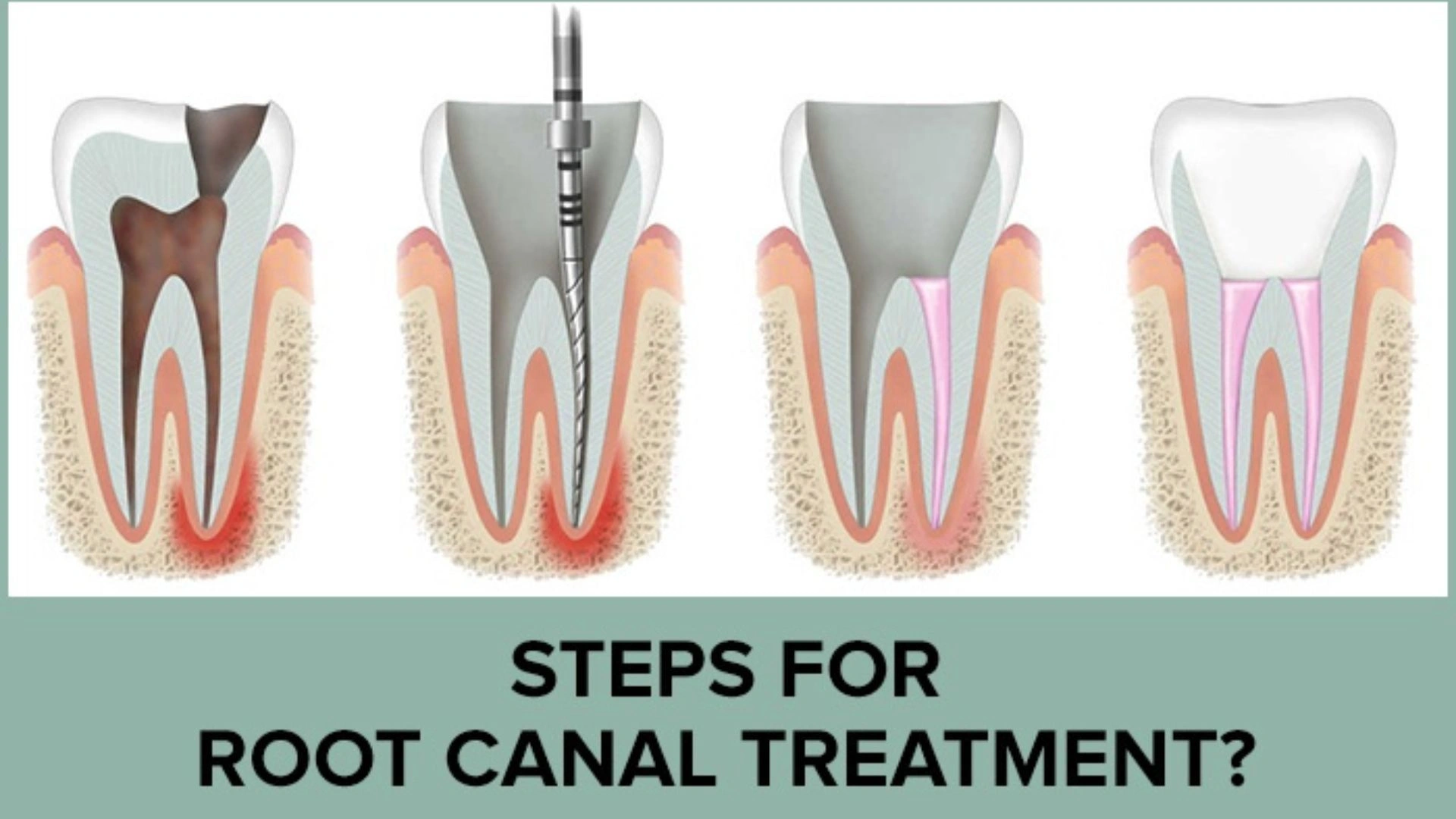
Root Canal Procedure Step by Step: What Happens During Treatment?
Let’s break down the entire process so you feel more confident and prepared.
1. Initial Examination and X-ray
Your dentist starts by examining the affected tooth and taking X-rays. This helps identify the extent of infection and the shape of the root canals.
Why this matters:
It ensures precise treatment and reduces the risk of complications.
2. Local Anesthesia (Pain-Free Experience)
Before starting the procedure, the dentist numbs the area using local anesthesia.
What you’ll feel:
- Mild pinch during injection
- No pain during the procedure
Modern dentistry makes the root canal procedure step by step almost painless.
3. Isolation Using Dental Dam
A rubber sheet (called a dental dam) is placed around the tooth to keep it clean and dry.
Purpose:
- Prevents saliva contamination
- Maintains a sterile environment
4. Access Opening in the Tooth
The dentist drills a small opening on the surface of the tooth to access the infected pulp.
Important Note:
This step allows the dentist to reach the root canals safely.
5. Cleaning and Removal of Infected Pulp
This is the most crucial part of the root canal procedure step by step.
The dentist:
- Removes infected pulp tissue
- Cleans the canals using special instruments
- Disinfects the area to remove bacteria
Real-world insight:
Many patients report immediate relief from pain after this step because the source of infection is removed.
6. Shaping the Root Canals
After cleaning, the canals are shaped to prepare them for filling.
Why shaping is important:
- Ensures proper sealing
- Prevents reinfection
7. Filling the Root Canals
The cleaned canals are filled with a rubber-like material called gutta-percha.
Goal:
- Seal the canals completely
- Protect against future infection
8. Temporary or Permanent Filling
The dentist closes the opening with a temporary or permanent filling. In many cases, a crown is recommended later for extra protection.
9. Placement of Dental Crown (Final Step)
A crown is often placed on the treated tooth to restore strength and function.
Benefits of a crown:
- Prevents tooth fracture
- Restores normal chewing ability
- Improves appearance
How Long Does the Root Canal Procedure Take?
The root canal procedure step by step usually takes:
- 60–90 minutes per session
- 1–2 visits depending on complexity
Molars may require more time due to multiple canals.
Is a Root Canal Painful?
This is the most common concern.
Truth:
With modern anesthesia and techniques, a root canal is no more painful than getting a filling.
What You May Feel After Treatment:
- Mild soreness for a few days
- Sensitivity while chewing
This can be managed with prescribed medication.
Benefits of Root Canal Treatment
Choosing a root canal over extraction has many advantages:
- Saves your natural tooth
- Prevents spread of infection
- Maintains jawbone structure
- Restores normal function
Understanding the root canal procedure step by step helps patients make informed decisions and avoid unnecessary fear.
Real-Life Example: Patient Experience
Ravi, a 32-year-old professional, ignored his tooth pain for weeks. When the pain became unbearable, he visited a dentist and was advised to have a root canal.
Initially nervous, he learned about the root canal procedure step by step. After the treatment:
- His pain disappeared immediately
- He resumed normal eating within days
- His tooth was saved without extraction
This shows how early intervention can prevent complications.
Aftercare Tips for Faster Recovery
Proper care after the procedure ensures long-term success.
Do’s:
- Brush and floss regularly
- Take medications as prescribed
- Visit your dentist for follow-ups
Don’ts:
- Avoid chewing hard foods initially
- Don’t ignore persistent pain
Common Myths About Root Canal Treatment
Myth 1: Root canals are extremely painful
Fact: Modern procedures are nearly painless.
Myth 2: Tooth extraction is better
Fact: Saving your natural tooth is always preferred.
Myth 3: Root canals cause illness
Fact: There is no scientific evidence supporting this claim.
Cost of Root Canal Treatment in India
The cost varies based on:
- Tooth location (front or molar)
- Dentist’s expertise
- Clinic location
Average Cost Range:
- ₹3,000 to ₹15,000 per tooth
- Crown cost: ₹2,000 to ₹10,000
When Should You See a Dentist?
Seek immediate dental care if you experience:
- Severe toothache
- Swelling in gums or face
- Pus discharge
- Fever with dental pain
Delaying treatment can worsen the infection and increase costs.
Conclusion
Understanding the root canal procedure step by step removes fear and confusion. It is a safe, effective, and pain-free solution to save your natural tooth.
If you are experiencing tooth pain, don’t wait. Early treatment not only relieves discomfort but also prevents serious complications.
Actionable takeaway:
Consult a qualified dentist at the first sign of tooth pain and discuss the root canal procedure step by step to make a confident, informed decision about your dental health.
FAQ
1. How many visits are required for a root canal?
Most treatments require 1–2 visits, depending on the infection severity.
2. Can I eat after a root canal?
Yes, but avoid hard or sticky foods until the crown is placed.
3. Is a crown necessary after a root canal?
In most cases, yes. It protects the tooth from damage.
4. How long does a root canal-treated tooth last?
With proper care, it can last a lifetime.
5. What happens if I delay a root canal?
The infection can spread, leading to severe pain or tooth loss.
Disclaimer
Please note that the prices mentioned on this page:
(a) represent an estimated range and may vary depending on the severity of the dental condition, treatment complexity, technology used, and the type or quality of dental materials selected. (b) are accurate as of the date of publication and are subject to change without prior notice, as per standard clinic policies. (c) may differ from actual treatment costs due to variations in individual diagnosis and treatment requirements, and general information available through online or AI-based searches may not always reflect real-time pricing.
For an accurate diagnosis and personalized treatment plan, we recommend booking a consultation with Imperial Smiles Dental.
To know more about Imperial Smiles Dental Membership Plans, call 98101724152.
Author