

You crack a molar on a Sunday, and by the time you reach a dentist you want one answer: can this be fixed today, or does it mean weeks with a temporary cap? Same-day dental crowns promise the first option, a permanent ceramic crown scanned, milled, and cemented in a single appointment. Faster is not automatically better, and for a restoration meant to last a decade or more, that difference is worth understanding. This guide compares same-day (CEREC) crowns with traditional lab-made crowns on the things that actually decide the result: fit, strength, materials, cost in India, and how long each lasts.
What Are Same-Day (CEREC and CAD-CAM) Crowns?
A same-day dental crown is a permanent crown that is scanned, designed, and milled inside the clinic during one visit, so you walk out with the final restoration already bonded in place. Most are made with CEREC technology, short for Chairside Economical Restoration of Esthetic Ceramics, or a similar CAD-CAM (computer-aided design and manufacturing) system.
Here is how it works. The dentist takes a 3D digital scan of your prepared tooth instead of a putty impression. Software designs the crown on screen, and a small in-clinic milling unit carves it from a solid ceramic block, usually lithium disilicate. The crown is then stained, glazed, fired, and bonded, typically within two to three hours. Because it all happens in one sitting, cerec crowns remove the two things patients dislike most about the traditional route: the temporary crown, and the second trip to the clinic.
How Is a Same-Day Crown Different From a Traditional Lab Crown?
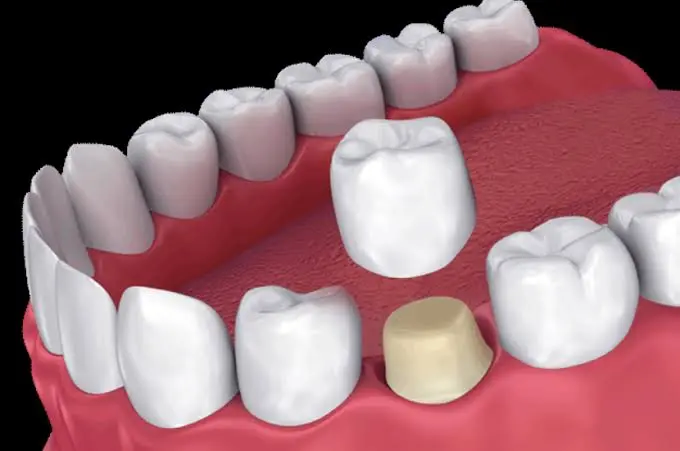
A traditional crown takes two visits, usually two to three weeks apart. At the first visit the dentist prepares the tooth, takes an impression, and fits a temporary crown. A dental laboratory then builds the final crown, which is cemented at the second visit. A same-day crown compresses that entire sequence into a single appointment.
The gap is not only about time. In the same day crown vs traditional comparison, the deeper difference is the material and how it is shaped. Same-day crowns are milled from one uniform ceramic block, which makes them strong and consistent but limits them mostly to monolithic ceramics. A dental lab can hand-layer porcelain and offers a wider menu: porcelain-fused-to-metal (PFM), full zirconia, layered all-ceramic, and gold alloys. That range helps in cases that need custom shade blending across the front teeth, or maximum strength on a heavily loaded molar.
The table below sums up the practical differences.
Are Same-Day Dental Crowns as Strong and Well-Fitting as Traditional Crowns?
For most single crowns, yes. Peer-reviewed research shows that chairside CAD-CAM crowns match traditional crowns on the two measures that decide long-term success: marginal fit, meaning how tightly the crown seals the tooth, and survival over many years.
Marginal fit is measured in microns, and gaps below roughly 100 microns are considered clinically acceptable. In published comparisons, CEREC-milled crowns recorded marginal gaps of about 72 micrometers against roughly 70 micrometers for conventional PFM crowns, a difference too small to matter in the mouth. On longevity, a review of chairside CAD-CAM restorations reported survival near 88.7% after up to 17 years of service, and about 86.9% at seven years for adhesively bonded all-ceramic restorations. A separate systematic review and meta-analysis found no meaningful longevity gap between CAD-CAM and conventionally made ceramic restorations.
So here is the honest position. The milling machine is not what makes a crown last. The material, the bite, and the margin do. A careful tooth preparation, the right ceramic for that tooth, a balanced bite, and clean brushing around the crown edge decide the outcome far more than whether the crown was made in one hour or over two weeks.
Same-Day vs Traditional: Where Each One Wins?
Same-day crowns win on convenience. One visit, no temporary crown to come loose, no second round of anaesthesia, and a fully digital scan that many patients find easier than a mouthful of impression putty. They are an excellent choice for a single damaged back or mid-mouth tooth, and for inlays and onlays.
Traditional crowns win on versatility. Because a laboratory can layer and characterise porcelain by hand, they remain the reference standard for front-tooth smile work where shade and translucency must blend with the neighbouring teeth, for dental bridges that span a gap, and for patients who grind heavily and need a specific high-strength zirconia or metal core.When Should You Choose a Same-Day Crown, and When a Traditional One?
Choose a one visit crown when you need a single tooth restored quickly, have little time for repeat appointments, and would rather avoid a temporary one. Choose a traditional lab crown for multi-tooth cosmetic cases, bridges and implant crowns that need a custom abutment, or when your dentist recommends a material a chairside mill cannot produce.
Either way, the process starts the same. At Imperial Smiles, both routes begin with a digital scan and 3D imaging, guided by prosthodontists Dr. Navneet Kumar and Dr. Palvinder Kaur, crown-and-bridge specialists with over a decade of clinical experience each. Whether your case suits same-day or lab fabrication is a clinical judgement about your tooth, not a marketing label. Ask directly which approach the clinic recommends for you, and whether same-day milling is available for your specific tooth.
How Much Do Dental Crowns Cost in India?
Dental crown cost in India varies widely by material, city, and clinic, and same-day crowns usually sit at the higher end because of the in-clinic scanning and milling technology. As a rough market guide, and always to be confirmed with your clinic, prices commonly land in these ranges:
- PFM (porcelain-fused-to-metal): about Rs 4,000 to Rs 10,000 per crown.
- Full zirconia or all-ceramic lab crown: about Rs 8,000 to Rs 25,000 per crown.
- Premium layered ceramic or high-strength zirconia: Rs 20,000 to Rs 40,000 or more.
- Same-day CEREC ceramic crown: often Rs 15,000 to Rs 35,000 or more.
Treat these as indicative ranges, not a quote. The real figure depends on the tooth, the grade of ceramic, imaging, and whether a root canal or post is also needed. Ask for an itemised estimate before treatment begins. Imperial Smiles also runs an in-house annual membership at Rs 499 that includes consultations, radiographs, and 5% off treatments, which can offset part of the cost.
How Long Do Dental Crowns Last?
A well-made crown of either type usually lasts 10 to 15 years, and often longer with good care. Studies on chairside ceramic crowns report high survival past 10 and even 17 years, comparable to lab crowns.
What shortens a crown’s life is rarely the way it was manufactured. It is grinding at night (bruxism), decay at the crown margin from missed cleaning, or a fracture in the tooth underneath. Daily brushing, flossing around the crown, a night guard if you clench, and a check-up every six months do more for crown lifespan than the CEREC-versus-lab decision. A crown placed after root canal treatment in Gurgaon is a good example: it protects a weakened tooth, and its success depends on both the crown and the sealed tooth beneath it.
Conclusion
This article is for general education only and is not a substitute for professional dental advice, diagnosis, or treatment. Crown suitability, materials, and cost differ for every patient. Always consult a qualified dentist before making a decision about your teeth. The statistics cited here are drawn from published dental research and the American Dental Association’s patient guidance, and individual results vary.
Frequently Asked Questions
Are same-day crowns as good as traditional crowns?
For most single crowns, yes. Peer-reviewed data show comparable marginal fit and survival. The main limits are complex cosmetic and multi-unit cases, where hand-layered lab crowns still hold an edge.
Do same-day crowns look natural?
Modern lithium disilicate ceramic is metal-free and blends well, so there is no dark gum line. For a front tooth that needs several shades blended, a hand-layered lab crown can still look a little more lifelike.
Is a one visit crown weaker because it is made quickly?
No. The speed comes from digital design and in-clinic milling, not from cutting corners. Strength depends on the ceramic and your bite, not on how long the crown took to make.
Can I get a crown after a root canal?
Often yes, once the tooth is stable. Your dentist will confirm whether the remaining tooth structure can support a crown directly or needs a post first.
Are same-day CEREC crowns available in Gurgaon?
It depends on the clinic’s equipment. Not every clinic has a chairside mill, so ask your dentist whether a same-day or a lab crown is the better fit for your tooth.
Which is cheaper, same-day or traditional?
Traditional PFM crowns are usually the most affordable. Same-day CEREC crowns cost more because of the technology involved. Confirm current prices with your clinic.
Author