

Ask three clinics in Gurgaon what a single implant costs and you can easily get ₹26,000, ₹45,000 and ₹80,000. None of them is necessarily overcharging. They are quoting different things.
An implant is not one item. It is a surgical component, a connector, a crown, and sometimes a scan and a graft on top. Clinics bundle these differently, and that is where almost all the confusion comes from.
This guide takes the quote apart piece by piece, gives the price ranges published by Gurgaon and Delhi NCR clinics as at November 2026, and explains exactly which questions to ask so you can compare two quotes properly. Figures move, so treat them as a guide and confirm current pricing at your consultation.
What You Are Actually Paying For
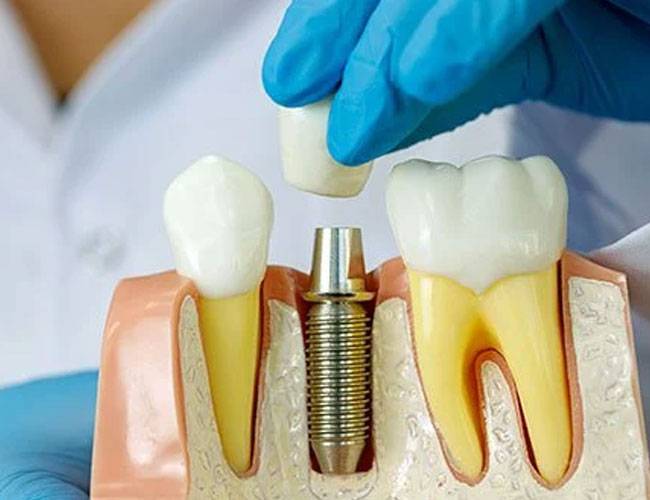
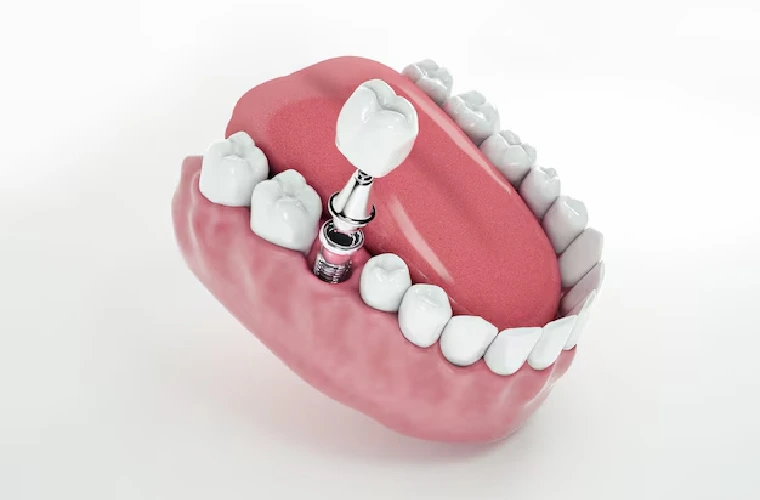
A single tooth implant has three parts, and most patients only ever hear about the first.
- The implant fixture. A titanium screw placed into the jawbone, which takes the place of the tooth root. This is where most of the price variation sits.
- The abutment. A small connector that joins the fixture to the crown. Usually ₹5,000 to ₹10,000, and often included in a package.
- The crown. The visible tooth. Priced separately in most quotes and available in several materials at quite different prices.
On top of those, some cases need a CBCT scan beforehand and a bone graft during surgery. Neither is automatic, and neither should appear on your bill without being explained first.
The Implant Fixture: Why the Range Is So Wide
Fixtures are priced by brand, and the brands sit in fairly consistent tiers. These are packaged prices published by two Gurgaon clinics in 2026. The first list includes the abutment and a PFM crown; the second is for the fixture alone, which is why the numbers look lower.
| Implant system | Origin | Published Gurgaon price |
| Adin, ABDent | Israel | From around ₹19,500 (fixture only) or ₹26,990 packaged |
| Osstem, Dio, Dentium | South Korea | From around ₹25,000 (fixture only) or ₹36,990 packaged |
| Neodent | Brazil | Around ₹31,990 to ₹36,990 packaged |
| Nobel Biocare | Switzerland, USA | From around ₹35,000 (fixture only) or ₹41,990 packaged |
| Straumann | Switzerland | From around ₹40,000 (fixture only), up to ₹65,990 packaged for premium surfaces |
| Zirconia (metal-free) systems | Various | Around ₹76,000 to ₹85,000 |
The spread between the cheapest and the most expensive system is roughly two to three times. That is a real difference in documented research history, surface technology and the availability of replacement parts a decade from now, but it is not a difference between a working implant and a failing one. Established Korean and Israeli systems are used routinely and successfully.
What matters more than the badge is whether your dentist can tell you the system by name, and whether spare components will still be obtainable if a crown needs replacing in fifteen years.
The Crown: The Line Item Most Often Left Out
If a quote says “implant – ₹25,000”, ask whether the crown is in it. Frequently it is not.
| Crown type | Published range in Delhi NCR | Notes |
| Metal | Around ₹2,000 to ₹4,000 | Rarely used on front teeth |
| PFM (porcelain fused to metal) | Around ₹4,000 to ₹12,000 | The most common choice; a thin dark line can show at the gum over time |
| Zirconia | Around ₹8,000 to ₹16,000 | Metal-free, better for visible teeth |
| All-ceramic, E-max | Around ₹12,000 to ₹18,000 | Highest aesthetics, usually for front teeth |
Two things are worth knowing here. Published crown prices vary more widely than any other part of the quote, so a wide range is honest rather than evasive. And a crown made for an implant costs more than the same crown on a natural tooth, because it needs extra components to attach to the fixture.
Scans and Grafts: The Costs That Appear Later
CBCT scan
A CBCT is a three-dimensional scan that shows bone height and the position of nerves and the sinus. It is not needed for every case, but where bone is limited it is the difference between planning the surgery and guessing at it.
A survey of eleven imaging centres across Gurgaon, with prices verified in January 2026, found full-mouth scans at ₹2,200 to ₹4,000 for images alone, and ₹4,500 to ₹5,800 where a radiologist’s report is included. A single quadrant with a report runs roughly ₹2,500 to ₹3,800. This is one of the few line items where published prices broadly agree.
Bone graft
If a tooth has been missing for a while, the bone that held it shrinks. Grafting rebuilds enough volume to hold an implant. Prices published by a Gurgaon clinic in 2026:
- Filling a small gap around an immediate implant: around ₹8,000
- Socket preservation at the time of extraction: around ₹12,000
- Guided bone regeneration, minor to moderate: around ₹18,000 to ₹35,000
- Block graft taken from your own jaw: around ₹20,000 to ₹28,000
Sinus lift
Upper back teeth sometimes need the sinus floor raised to make room. Published Gurgaon prices are roughly ₹9,000 to ₹11,000 for the closed technique and ₹20,000 to ₹25,000 for the open one. National chains quote substantially more for the same procedures, so it is worth asking which technique is planned, not just what it costs.
Putting a Realistic Total Together
For a straightforward single tooth with adequate bone and no graft, published Gurgaon packages including fixture, abutment and crown run from roughly ₹27,000 at the budget end to ₹66,000 for premium systems. Add a CBCT where one is needed, and a graft if the bone requires it.
| Scenario | Realistic total |
| Korean or Israeli system, PFM crown, no graft | Around ₹27,000 to ₹40,000 |
| Premium European system, zirconia crown, no graft | Around ₹50,000 to ₹70,000 |
| Any system with CBCT and a moderate graft | Add roughly ₹15,000 to ₹45,000 |
These are indicative ranges drawn from clinic prices published in 2026, not a quotation. Only an examination can tell you which applies to you.
Why Two Quotes Differ by ₹30,000
When you have two very different numbers in front of you, the gap is almost always one of these:
- One includes the crown and the other does not.
- Different implant brands, which alone can account for a two to three times difference on the fixture.
- Different crown materials, where zirconia can be double the price of PFM.
- A CBCT billed separately in one quote and absorbed in the other.
- Grafting anticipated in one plan and discovered mid-surgery in the other.
- Follow-up visits, the surgical guide and the final fitting included or charged on top.
A comparable quote names the implant system, states the crown material, and says in writing what happens to the price if a graft turns out to be necessary.
Implants Compared With a Bridge or a Denture
| Single implant | Three-unit bridge | Partial denture | |
| Neighbouring teeth | Untouched | Two healthy teeth filed down | Untouched |
| Bone underneath | Preserved by the implant | Continues to shrink | Continues to shrink |
| Feels like | A fixed tooth | A fixed tooth | Removable |
| Upfront cost | Highest | Moderate | Lowest |
The argument for an implant is rarely about the first year. It is that the bridge requires cutting down two healthy teeth that were doing nothing wrong, and that a denture lets the bone underneath continue to shrink.
How Long an Implant Actually Lasts
The most careful recent evidence is a 2019 systematic review and meta-analysis published in the Journal of Dentistry by Howe, Keys and Richards, which pooled eighteen prospective studies.
Its conventional analysis put ten-year implant survival at 96.4 per cent. The authors also ran a sensitivity analysis that accounted for patients lost to follow-up, which gave a lower and more cautious figure of 93.2 per cent. They reported survival of 91.5 per cent in patients aged sixty-five and over.
Both numbers are worth knowing. Implants are among the more predictable procedures in dentistry, and they are not permanent in the sense of never needing attention. Any clinic quoting a flat “98 per cent success” without a source is reaching beyond the published evidence.
What to Ask Before You Agree
- Which implant system are you using, by name and brand?
- Does this price include the abutment and the crown?
- What crown material is quoted?
- Do I need a CBCT, and is it billed separately?
- Is a bone graft likely, and what will it add if it is?
- How many visits are included, and what is charged after that?
- What is the warranty on the fixture and on the crown?
Conclusion
A single implant is not an expensive procedure with one price. It is four or five separate costs, and the only way to compare clinics fairly is to get all of them itemised. A quote that names the implant system, states the crown material and tells you in advance what a graft would add is a quote you can actually judge.
If you are in Gurgaon, you can book a consultation at Imperial Smiles Dental and Implant Clinic for an examination and a written, itemised treatment plan.
Related guides
- Dental implants in Gurgaon
- What are the phases of a dental implant procedure?
- How long do dental implants last?
- Are dental implants safe?
- Full mouth dental implants cost
- Dental implants for smokers
FREQUENTLY ASKED QUESTIONS
Packages including the fixture, abutment and crown were published in 2026 at roughly ₹27,000 to ₹66,000 depending on the implant system and crown material. A CBCT scan or bone graft adds to that.
Usually because the first figure was for the fixture alone. The abutment, the crown, the scan and any grafting are often quoted separately. Ask for an all-in figure in writing.
Premium systems have longer documented research records and wider parts availability, which matters if a component needs replacing in fifteen years. Established Korean and Israeli systems are used successfully every day. Discuss it as a trade-off rather than assuming dearer is better.
Not always. It depends on how much bone is left, which depends largely on how long the tooth has been missing. A scan or examination will tell you before surgery, not during it.
A 2019 meta-analysis found ten-year survival of 96.4 per cent, falling to 93.2 per cent when patients lost to follow-up were accounted for, and 91.5 per cent in those aged sixty-five and over.
Placement is done under local anaesthetic and most patients report pressure rather than pain. Soreness for a few days afterwards is normal and usually managed with ordinary painkillers.
Author